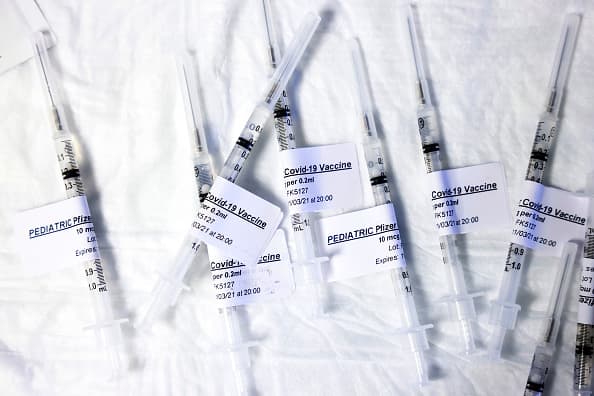
While attempting to pump gas in suburban Chicago Ridge, a man found a needle device hidden in the nozzle, police warned Tuesday.
According to a Facebook post from the Chicago Ridge Police Department, the man was at a Shell Gas Station at 111th Street and Ridgeland at around 7 p.m. when he went to squeeze the trigger on the gas nozzle and felt a poke on his finger.
The man found a “needle device” on the handle, as well as an unknown white substance in the hallow area behind the needle and an adhesive substance holding the assembly to the trigger of the gas pump, police said.
Officials said the man was taken to an area hospital for evaluation and was asymptomatic for exposure.
Police are working with the Illinois State Police Crime Lab is working to analyze the needle device, the post noted.
Anyone with information about the incident is encouraged to contact the Chicago Ridge Police Investigations Division at (708) 425-7831.
Authorities say eight people were wounded in an attack at a Michigan high school in which three students were killed.
Oakland County Undersheriff Mike McCabe said at a news conference that two of the wounded were undergoing surgery as of 5 p.m. Tuesday and that the six others were in stable condition. He identified the three students who were killed as a 16-year-old boy and two girls, ages 14 and 17.
Authorities say they received a flood of 911 calls shortly before 1 p.m. about an attack at Oxford High School in Oxford Township, a community of about 22,000 people roughly 30 miles (48 kilometers) north of Detroit.
McCabe said deputies took the shooting suspect — a 15-year-old sophomore — into custody without incident within five minutes of arriving at the school. He said the suspect’s parents visited him where he’s being held and advised their son not to talk to investigators, as is his right.
He said as far as he knows, the suspect had no prior run-ins with law enforcement.
THIS IS A BREAKING NEWS UPDATE. AP’s earlier story follows below.
A 15-year-old sophomore opened fire at his Michigan high school on Tuesday, killing three students and wounding six other people, including a teacher, authorities said.
Oakland County Undersheriff Mike McCabe said at a news conference that he didn’t know what the assailant’s motives were for the attack at Oxford High School in Oxford Township, a community of about 22,000 people roughly 30 miles (48 kilometers) north of Detroit.
Officers responded at around 12:55 p.m. to a flood of 911 calls about an active shooter at the school, McCabe said. Authorities arrested the suspect at the school and recovered a semi-automatic handgun and several clips.
“Deputies confronted him, he had the weapon on him, they took him into custody,” McCabe said, adding that suspect wasn’t hurt when he was taken into custody and he refused to say how he got the gun into the school.
Authorities didn’t immediately release the names of the suspect or victims. About 1,700 students attend the school.
Tim Throne, the superintendent of Oxford Community Schools, said he didn’t know yet know the victims’ names or whether their families had been contacted.
“I’m shocked. It’s devastating,” the shaken superintendent told reporters.
The school was placed on lockdown after the attack, with some children sheltering in locked classrooms while officers searched the premises. They were later taken to a nearby Meijer grocery store to be picked up by their parents.
Isabel Flores told WJBK-TV that she and other students heard gunshots and saw another student bleeding from the face.
They then ran from the area through the rear of the school, said Flores, a 15-year-old ninth grader.
McCabe said investigators would be looking through social media posts for any evidence of a possible motive.
Robin Redding said her son, Treshan Bryant, is a 12th grader at the school but stayed home on Tuesday. She said he had heard threats of a shooting at the school.
“This couldn’t be just random,” she said.
Redding didn’t provide specifics about what her son had heard, but she expressed concern with school safety in general.
“Kids just, like they’re just mad at each other at this school,” she said.
Bryant said he texted several younger cousins in the morning and they said they didn’t want to go to school, and he got a bad feeling. He asked his mom if he could do his assignments online.
Bryant said he had heard vague threats “for a long time now” about plans for a shooting at the school.
“You’re not supposed to play about that,” he said of the threats. “This is real life.”
School administrators posted two letters to parents on the school’s website this month, saying they were responding to rumors of a threat against the school following a bizarre vandalism incident.
According to a Nov. 4 letter written by Principal Steve Wolf, someone threw a dear head into a courtyard from the school’s roof, painted several windows on the roof with red acrylic paint and used the same paint on concrete near the school building.
Without specifically referencing that incident, a second post on Nov. 12 assured “there has been no threat to our building nor our students.”
“We are aware of the numerous rumors that have been circulating throughout our building this week. We understand that has created some concern for students and parents,” the administrators wrote. “Please know that we have reviewed every concern shared with us and investigated all information provided. Some rumors have evolved from an incident last week, while others do not appear to have any connection. Student interpretations of social media posts and false information have exacerbated the overall concern.”
Michigan’s governor, Gretchen Whitmer, was one of several elected officials who expressed condolences to the victims.
“Gun violence is a public health crisis that claims lives every day. We have the tools to reduce gun violence in Michigan. This is a time for us to come together and help our children feel safe at school,” Whitmer said in a statement.
Adam Hollingsworth, otherwise known as “The Dread Head Cowboy,” speaks to reporters after a court hearing in September 2020. Hollingsworth, who was supposed to stand trial this week on animal cruelty charges, was jailed Tuesday on a contempt of court charge after repeatedly interrupting the judge in his case and accusing prosecutors of withholding evidence. | Ashlee Rezin/Sun-Times file photo
Activist Adam Hollingsworth, who is representing himself against animal cruelty charges, was led out of court after repeatedly interrupting Cook County Judge Michael McHale.
Adam Hollingsworth, the activist known as the “Dread Head Cowboy,” was sentenced Tuesday to 90 days in jail on a contempt charge for arguing with a Cook County judge.
The contempt charge lands a day after Hollingsworth, who is representing himself in his animal cruelty case, had repeatedly talked over Judge Michael McHale and made claims that prosecutors were holding back evidence.
Hollingsworth was led out of the courtroom by sheriff’s deputies to the holding cell in McHale’s chambers, leaving his black stetson on a table. After an hour in chambers, McHale recalled the case and handed Hollingsworth the 90-day sentence.
“You have made a mockery of these proceedings,” McHale said after rattling off a series of incidents where Hollingsworth had made unsubstantiated claims or disrupted court since he was arrested for the horseback ride he took in 2020 on the Dan Ryan Expressway to raise awareness about violence against youth
“You have tired to do that, and you’ve succeeded.”
McHale had repeatedly warned Hollingsworth not to interrupt and to focus on the topic of the status hearing: Hollingsworth’s claims that prosecutors were withholding evidence.
Tuesday, Hollingsworth claimed a dog ate the flash drive and repeatedly interrupted the judge.
“We are not going to do this the way we’ve been doing it the past year and a half,” McHale had warned Hollingsworth, telling him he’d be held in contempt of court if he interrupted him three times.
After sparring with Hollingsworth the previous day, the judge quickly grew exasperated again Tuesday as Hollingsworth, 34, repeated his claims that he had not received discovery materials, including audio from a dashboard camera that prosecutors said they did not have.
“Where’s the flash drive?” McHale asked.
“My dog chewed it up,” Hollingsworth said, prompting the judge to order the activist to raise his right hand and swear to tell the truth.
“Did you throw it out? And, by the way, lying under oath is a crime. It’s perjury,” McHale said.
McHale’s temper flared as Hollingsworth claimed that prosecutors had been hiding evidence from him. Assistant State’s Attorney Christina Dracopoulos said prosecutors had turned over all files in the case to Hollingsworth on “several” occasions, and had sent him an online link to the same files Monday. Hollingsworth conceded that he had not downloaded those files.
“I want to know from you what right do you have, what basis do you have, to make that claim against the prosecutors,” McHale said. “You’re saying you got (the files), you got it yesterday. Would you still like to make an accusation they are hiding evidence, or would you like to withdraw it?”
As Hollingsworth stood silent for several seconds, the judge began speaking.
“I guess you’re thinking, because...”
“Can I talk?” Hollingsworth interjected, talking over the judge.
“That’s it! You’re in contempt! Take him back,” McHale said.
Hollingsworth has struggled to navigate the court system since he publicly fired his pro-bono defense attorney in October 2020. His lack of knowledge of court procedures has continually been on display in McHale’s courtroom since he started representing himself.
With day-for-day credit for good behavior, Hollingsworth should be released as soon as mid-January.
He expected back in court on Jan. 21.
from Chicago Sun-Times - All https://ift.tt/3piSWQV
Rosalia Tejeda, second from left, plays with her children, from left, son Juscianni Blackeller, 13; Adaliana Gray, 5, and Audrey Gray, 2, in their backyard in Arlington, Texas, Monday, Oct. 25, 2021. As Tejeda, 38, has learned more about health risks posed by fracking for natural gas, she has become a vocal opponent of a plan to add more natural gas wells at a site near her home. (AP Photo/Martha Irvine) ORG XMIT: RPMI201 | Martha Irvine / AP
Living close to drilling sites has been linked to health risks, especially to kids. Many of the wells Total Energy has drilled in Arlington are near Latino and Black or low-income communities.
ARLINGTON, Texas — At a playground outside a North Texas day care center, giggling preschoolers chase each other into a playhouse. Toddlers scoot by on tricycles. A boy cries as a teacher helps him negotiate over a toy.
Uphill from the playground, peeking between trees, Total Energies is pumping for natural gas.
The French energy giant wants to drill three new wells on the property next to Mother’s Heart Learning Center, which serves mainly Black and Latino children. The three wells and two existing ones would lie about 600 feet from where the children planted a garden of sunflowers.
For families of the children and for others nearby, it’s a prospect fraught with fear and anxiety.
Living near drilling sites has been linked to health risks, especially to children, ranging from asthma to neurological and developmental disorders.
While some states are requiring energy companies to drill farther from day care centers, schools and homes, Texas has made it exceedingly difficult for local governments to fight back.
The affected areas also include communities near related infrastructure — compressor stations, for example, which push gas through pipelines and emit toxic fumes, and export facilities, where gas is cooled before being shipped overseas.
Martha Irvine / AP
Wanda Vincent prepares to check the temperature of 2-year-old Olivia Grace Charles, who holds the hand of her mother Guerda Philemond outside the Mother’s Heart Learning Center in Arlington, Texas. Philemond is worried about a proposal to add three new gas wells at a drill site that’s a few hundred feet from the day care center and several homes.
“I’m trying to protect my little one,” said Guerda Philemond, whose 2-year-old Olivia Grace Charles attends the day care center in Arlington. “There’s a lot of land, empty space they can drill. It doesn’t have to be in the back yard of a day care.”
Total declined an interview request. In a written statement, the company said it has operated near Mother’s Heart for more than a decade without any safety concerns expressed by the city of Arlington.
“We listen to and do understand the concerns of the local communities with whom we interact frequently to ensure we operate in harmony with them and the local authorities,” the statement said.
The clash in Arlington comes against the backdrop of pledges from world leaders to reduce emissions, burn less fossil fuel and transition to cleaner energy. Yet the world’s reliance on natural gas is growing. As soon as next year, the United States is set to become the world’s largest exporter of liquid natural gas, or LNG, according to Rystad Energy.
As a result, despite pressure for energy companies to shift their spending to cleaner technologies, there likely will be more drilling for natural gas in Arlington and other communities.
And children who spend time near drilling sites or natural gas distribution centers — in neighborhoods critics call “sacrifice zones” — could face a risk of developing neurological or learning problems and exposure to carcinogens. A report by Physicians for Social Responsibility and Concerned Health Professionals of New York, which reviewed dozens of scientific studies, found the public health risks associated with these sites include cancers, asthma, respiratory diseases, rashes, heart problems and mental health disorders.
Many of the wells Total has drilled in Arlington are near Latino and Black or low-income communities, often just a few hundred feet from homes. An analysis by The Associated Press of the locations of wells Total operates in Arlington shows their density is higher in neighborhoods that many people of color call home.
“America is segregated, and so is pollution,” said Robert Bullard, director of the Bullard Center for Environmental and Climate Justice at Texas Southern University. “The dirty industries and what planners call locally unwanted land uses oftentimes followed the path of least resistance. Historically, that’s been poor communities and communities of color.”
When gas pumped in Texas is shipped out for export, it goes to liquid natural gas facilities along the Gulf Coast. Many of those facilities are near communities, that are predominantly non-white, such as in Port Arthur, Texas.
“There’s constant talk of expansions here,” said John Beard, founder of the Port Arthur Community Action Network, which opposes the expansion of export facilities. “When you keep adding this to the air, the air quality degrades, and so does our quality of life ,and so does our health.”
Martha Irvine / AP
Wanda Vincent, who owns Mother’s Heart Learning Center in Arlington, Texas, is upset about a proposal to add natural gas wells at a nearby fracking site that’s operated by TEP Barnett.
At the Arlington day care center, owner Wanda Vincent has been cautioning parents about the health risks and gathering signatures to petition the city to reject Total’s drilling request.
When she opened the center nearly two decades ago, Vincent said, she wanted to provide a refuge for children in her care, some of whom suffer from hunger and poverty.
That was before natural gas production accelerated in the United States. Around 2005, energy companies discovered how to drill horizontally into shale formations using hydraulic fracturing techniques — a technique known as fracking.
Water and chemicals are shot deep underground into a well bore that travels horizontally. It is highly effective. But fracking is known to contribute to air and water pollution and to raise risks to people and the environment.
Some states have acted to force fracking away from where people live and go to school. Vermont and New York state banned fracking years ago. Last year, Colorado required new wells to be drilled at least 2,000 feet from homes and schools. California has proposed a limit of 3,200 feet. Los Angeles has taken steps to ban urban drilling.
In Arlington, drilling is supposed to be done no closer than 600 feet from day care centers or homes. But companies can apply for a waiver to drill as close as 300 feet.
France, Total’s home country, bars fracking. But that ban is largely symbolic because no meaningful oil or gas supplies exist in France. Total, one of the world’s largest natural gas companies, drills in 27 other countries. It turns much of that gas into liquid, then ships it, trades it and re-gasifies it at LNG terminals worldwide.
The gas wells next to Mother’s Heart represent a tiny fraction of Total’s global operations. Yet the company holds tight to its plans to drill there despite the community’s resistance.
“Nobody should have a production ban unless they have a consumption ban because it has made places like Arlington extraction colonies for countries like France, and they have shifted the environmental toll, the human toll, to us,” said Ranjana Bhandari, director of Liveable Arlington, a group leading the opposition to Total’s drilling plans.
In Arlington, companies that are rejected for a drilling permit can reapply after a year. Some Arlington city council members, who declined interview requests, previously have said they fear litigation if they don’t allow the drilling. That’s because a Texas law bars local governments from banning, limiting or even regulating oil or gas operations except in limited circumstances.
“If I’m able to reach out to the French and speak to them directly, I would let them know, ‘Would you be able to allow somebody to go in your back yard and do natural gas drilling where you know your wife lays her head or your kids lay their head?’ ” said Philemond, the day care center parent. “And the answer would absolutely be ‘No’ within a second.”
Martha Irvine / AP
Frank and Michelle Meeks in their backyard in Arlington, Texas, with a fracking site, hidden by “sound walls,” looms behind them.
A mile or so from the day care, in the back yard of Frank and Michelle Meeks, a high-pitched ringing blares like a school fire alarm as the sun sets. Just beyond their patio and grill looms the wall of a Total site where one of the wells was in the “flowback” stage. This site also sits behind other houses and near two day care centers.
When the wells were first drilled, Michelle Meeks said, the sound and vibrations were a full-body experience. At this point, she and her husband barely notice it.
After the drilling started a decade ago at the site a few hundred feet behind their house, they noticed cracks in their foundation and their patio. They now receive royalty checks for $15 or $20 a few times a year. That wouldn’t make a dent in the cost of repairing the cracks in their foundation. But when the oil and gas developers came knocking years ago, the couple thought saying no would have been futile.
“In Texas, you really can’t fight oil and gas production,” said Frank Meeks, 60, a machine operator. “We don’t have the money to go and get big-time lawyers to keep them out of our back yards.”
Arlington’s air quality exceeds federal ozone pollution standards. In 2012, at the height of the fracking boom, asthma rates for school children in Tarrant County were 19% to 25% — far above national and state norms.
As the fracking boom took off, “land men” from the oil and gas companies went door to door in Arlington, asking permission to drill beneath homes of those who owned mineral rights. Some homeowners were offered signing bonuses and royalties. Renters — who don’t own the rights to the minerals beneath their homes — had no choice but to yield to drilling and received nothing for it.
Arlington sits atop the Barnett Shale, one of the largest on-land natural gas fields in the United States. Gas production, which peaked in the Barnett Shale a decade ago, has been declining. Even with natural gas prices rising, few large U.S. companies plan to drill new wells at a time when investors are seeking environmentally responsible companies.
“Total is a publicly traded company. They claim to be very interested in the energy transition and so forth,” said Bruce Bullock, director of the Maguire Energy Institute at Southern Methodist University. “If a U.S. company were to do that here that was publicly traded, their stock would be hammered.”
from Chicago Sun-Times - All https://ift.tt/3rksusJ
A Calumet City police SUV was stolen Nov. 30, 2021. | Adobe Stock Photo
Officers were called to a gas station on Sibley Boulevard around 6:20 a.m. to investigate an attempted carjacking. When they arrived, four armed suspects ran off in different directions.
A Calumet City police SUV was stolen as officers searched for carjacking suspects near a gas station Tuesday morning.
Officers were called to the gas station on Sibley Boulevard around 6:20 a.m. to investigate an attempted carjacking, a Calumet City spokesman said. When they arrived, four armed suspects ran off in different directions.
While officers searched the area, one of the suspects made his way back to the gas station and drove off in a marked police SUV, the spokesman said.
The suspect got onto the Bishop Ford Freeway and exited near 99th and Green Streets, where he dumped the SUV and ran off, the spokesman said. Officers used the vehicle’s GPS tracker to recover the SUV, which was not damaged.
No arrests have been reported.
from Chicago Sun-Times - All https://ift.tt/3Ea2xQ9
Police responded at around 12:55 p.m. to a report of an active shooter at Oxford High School in Oxford Township, a community of about 22,000 people roughly 30 miles north of Detroit.
Authorities arrested the suspect at the school and recovered a handgun. They didn’t immediately release the names of the suspect or victims.
OXFORD TOWNSHIP, Mich. — Authorities say a 15-year-old sophomore opened fire at his Michigan high school, killing three other students and wounding six other people, including a teacher.
Oakland County Undersheriff Mike McCabe said at a news conference that he didn’t know what the assailant’s motives were for the attack Tuesday afternoon at Oxford High School in Oxford Township, a community of about 22,000 people roughly 30 miles north of Detroit.
Authorities arrested the suspect at the school and recovered a handgun. They didn’t immediately release the names of the suspect or victims.
from Chicago Sun-Times - All https://ift.tt/3xFbTRh
Authorities say a 15-year-old sophomore opened fire at his Michigan high school, killing three other students and wounding six other people, including a teacher.
Oakland County Undersheriff Mike McCabe said at a news conference that he didn’t know what the assailant’s motives were for the attack Tuesday afternoon at Oxford High School in Oxford Township, a community of about 22,000 people roughly 30 miles north of Detroit.
Authorities arrested the suspect at the school and recovered a handgun. They didn’t immediately release the names of the suspect or victims.
A medical helicopter landed shortly after 2 p.m. in the parking lot of the school.
The school was placed on lockdowns, with some students sheltering in locked classrooms. They later were ushered to the parking lot of a nearby store after police secured the school and took the suspect into custody.
Cases are rising in several Midwest states as temperatures cool and people head inside this winter, making the area the “current COVID hot spot,” according to Chicago’s top doctor.
Chicago Department of Public Health Commissioner Dr. Allison Arwady noted Tuesday that Michigan, Minnesota and Wisconsin “currently have the highest rates of COVID-19 in the country per capita.”
As of Tuesday, Minnesota was averaging 60.9 new coronavirus cases per day, per 100,000 residents.
At the same time, Wisconsin and Michigan averaged 55.4 and 55.5, respectively.
Indiana and Iowa saw lower case rates, but both remained among the highest 20 states when it comes to that metric. Iowa reported 41.8 new daily cases per 100,000 residents and Indiana stood at 31.9. Missouri stood at 25.2.
All of the states listed have higher rates than Illinois, which saw 23.7 average daily cases per 100,000 residents as of Tuesday.
“The Midwest is the current COVID hot spot as temperatures drop and people spend more time inside, so please protect yourself and get vaccinated,” Arwady said in a statement.
Illinois remains the only Midwest state still implementing a mask mandate, which some experts have cited among the reasons the state’s case rates are lower than its neighbors.
“I think context matters in terms of where geographically the states are, and we know for sure that the colder weather – we’re seeing that in Europe as well, the colder countries are seeing higher numbers of cases, so just something to keep in mind,” Dr. Jennifer Seo, chief medical officer with the Chicago Department of Public Health, said in a press conference earlier this month. “But I would compare us probably more closely to Michigan or Minnesota where they don’t have masks dates like we do here in Illinois and they’re seeing highest case rates right now.”
Chicago’s numbers appeared to drop in the last week, but Arwady noted that the dip could largely be attributed to the Thanksgiving holiday and a lack of testing. The city’s positivity rate still climbed from 3% last week to 3.5% this week.
“We see a big drop off of people being tested, being diagnosed in that setting,” Arwady said. “We see positivity come up, but we see a dip.”
This comes as Chicago officials prepare for the new omicron COVID variant, though they said there are still many questions to be answered about the emerging variant of concern.
In a statement Monday, Chicago Mayor Lori Lightfoot and Arwady said the city is “very engaged in the heightened discussions regarding the omicron variant of the COVID-19 virus, particularly with our federal partners.”
“At this point, there are many questions which scientists across the world, and at the Chicago Department of Public Health, are actively working to address all while closely monitoring this strain,” the statement read. “While that work continues, we must as a city, and importantly as individuals, continue to follow the public health guidance: get vaccinated, and if vaccinated, get your booster; wear a mask indoors and when you’re around other people; and if you are feeling sick, stay home to save lives. The unvaccinated remain the most at risk to themselves and others so please get vaccinated as soon as possible.”
Similarly, Cook County’s health department said on Friday it was watching the variant “very carefully.”
The global risk of omicron is “very high,” the World Health Organization said Monday, as more countries reported cases of the variant that has led to worldwide concern that there is more pandemic suffering ahead.
Despite the global alarm, there is still little understanding about the variant and how virulent it may be.
The leading infectious disease expert for the U.S., Dr. Anthony Fauci said public health experts are trying to find answers to questions such as whether the omicron variant causes more severe illness and whether it can evade protection from vaccines or treatments.
“It also has a bunch of mutations that would suggest it could evade the protection, for example, of monoclonal antibodies and perhaps even convalescent plasma for people who have been infected and recovered, and possibly vaccine. These are all maybes, but the suggestion is enough,” Fauci said.
The extent of the actual spread of the omicron variant around the world, however, still remains unclear as countries discover new cases each day.
The U.S. has yet to identify any cases but Fauci and other experts have warned that it could already have made it to America.
“I would not be surprised if it is. We have not detected it yet, but when you have a virus that is showing this degree of transmissibility and you’re already having travel-related cases that they’ve noted in Israel and Belgium and other places, when you have a virus like this, it almost invariably is ultimately going to go essentially all over,” Fauci said.
As concern over the new omicron ‘variant of concern’ grows, doctors, scientists and public health experts are working to understand everything everything from the variant’s transmissibility, to vaccine effectiveness, to where omicron has been detected and more.
Dr. Rachel Rubin, Co-Lead and Senior Medical Officer for the Cook County Department of Public Health, helped to clarify what is currently known about the omicron COVID variant, and what questions still remain.
Why is the omicron variant so concerning?
It’s more concerning – for now – until we know more about it. There are more mutations associated with this variant, over 30 mutations on the spike protein alone (which is what attaches the virus to the ACE-2 receptor on our cells and allows infection), compared to previous versions. (Delta variant has fewer than 10). We’ll be learning more about the Omicron in the days and weeks to come, so we will know more shortly.
Does the variant have a greater ability to infect?
We won’t know for a couple of weeks. We know vaccines greatly reduce the risk of infection and transmission, and until we know more about how Omicron interacts with current vaccines, we won’t be able to answer this specific question with much confidence.
When will be able to test for Omicron?
Immediately. State and federal agencies can conduct sequencing right away. In addition, PCR tests can reveal if the virus is the Omicron variant.
Is Omicron currently in the United States?
Probably, though we’ve seen no positive tests yet. We know it is in Canada and with global travel, it’s almost inevitable that it has arrived here. While this variant seems to be more contagious, we also have a better chance to contain it because we were aware of it early, with only a few hundred cases to date.
When will we know if the current vaccines are effective against Omicron?
Probably within a couple of weeks. This time frame will be able to tell us how many breakthrough cases there are at the same time as laboratory investigation is underway. We are encouraged so far that in South Africa most of the cases seem to mild.
Should we be panicked about the variant, especially the unknown?
It’s wise to be concerned and cautious, but there is no reason to panic. There will be no lockdowns or anything of the sort, at least for now. The current remediations and recommendations should stay in place for the time being, and we urge everyone to follow them. It is especially important to stay masked and maintain physical distancing indoors unless only with your household.
Will there be new versions of the vaccines available?
Much like the flu shot, which is reformulated every year based on new versions of the flu, new versions of the COVID-19 vaccines are likely. The companies have indicated they can have new booster formulations, to cover variants including perhaps Omicron, within 100 days.
What is going to change because of this variant?
You won’t see an immediate change in guidance, but as people move indoors in the cold weather, we have we see changes in behavior, changes in workplace practices, and a real focus common sense, science-driven practices such as mask wearing, frequent hand-washing and physical distancing.
How should vaccinated people interact with non-vaccinated people, given the new variant?
If you are vaccinated, keep masking and physical distancing and all the practices that have been in place. If you are not vaccinated, we ask you to keep away. You are at a much higher risk of carrying and transmitting the virus. Until we have so little of the virus in our communities, the unvaccinated carry a really dangerous risk to themselves and the rest of us.
Also, we need to do a better job of testing. If you are traveling, get tested when coming home. If you are unvaccinated or plan to be with people who are unvaccinated, get a test that morning. We need to have more testing to get a more complete picture of how widespread the virus is circulating and to keep each other safe.
Police responded at around 12:55 p.m. to a report of an active shooter at Oxford High School in Oxford Township, a community of about 22,000 people roughly 30 miles north of Detroit.
The suspected shooter was arrested and a handgun was recovered, said the Oakland County Sheriff’s Office, which added that it doesn’t think there was more than one attacker.
OXFORD TOWNSHIP, Mich. — Someone opened fire at a Michigan high school on Tuesday and shot four to six people, though none were confirmed dead, authorities said.
Police responded at around 12:55 p.m. to a report of an active shooter at Oxford High School in Oxford Township, a community of about 22,000 people roughly 30 miles north of Detroit.
The suspected shooter was arrested and a handgun was recovered, said the Oakland County Sheriff’s Office, which added that it doesn’t think there was more than one attacker.
Four to six people were wounded, but no fatalities have been reported, the sheriff’s office said. It wasn’t immediately clear if the any students were among the wounded.
A medical helicopter landed shortly after 2 p.m. in the parking lot of the school.
The school was placed on lockdowns, with some students sheltering in locked classrooms. They later were ushered to the parking lot of a nearby store after police secured the school and took the suspect into custody.
from Chicago Sun-Times - All https://ift.tt/3d9RxGk
Ald. Ed Burke (far left) sparred with with Mayor Lori Lightfoot during her very first Chicago City Council meeting, back in May 2019. | Ashlee Rezin/Sun-Times
The mayor’s veto threat is not surprising, given her longstanding political animus toward Burke. But it further complicates an already contentious situation that is going right down to the wire with the Rules Committee abruptly canceling a meeting scheduled for 1 p.m. Tuesday. Direct introduction of a citywide map to allow for immediate consideration at Wednesday’s full Council meeting would require 34 votes.
Mayor Lori Lightfoot is prepared to veto any new ward map that protects her longtime political nemesis, indicted Ald. Edward Burke (14th), her City Council allies have been told.
The mayor’s veto threat is not surprising, given her longstanding political animus toward Burke, her repeated demands for his resignation and the fact that Lightfoot owes her election to the Burke corruption scandal.
But it further complicates an already contentious situation that is going right down to the wire with the Rules Committee abruptly canceling a meeting scheduled for 1 p.m. Tuesday. Direct introduction of a citywide map to allow for immediate consideration at Wednesday’s full Council meeting would require 34 votes.
The new citywide ward map being crafted for the Rules Committee by Mike Kasper, who served for decades as the election law expert for deposed Illinois House Speaker Michael Madigan, goes to great lengths to protect Burke.
It would accommodate an explosion of white population downtown and along the lakefront by creating a new downtown ward that takes in “pieces of the West Loop and pieces of the South Loop above the 25th Ward.”
That would protect Burke by keeping his 14th Ward out of Little Village.
Kasper’s map would also help Marty Quinn, Madigan’s hand-picked alderperson and longtime political operative. It does that by moving Midway Airport from Ald. Silvana Tabares’ 23rd Ward into Quinn’s 13th Ward.
Never mind that Madigan was deposed as speaker and state Democratic Party chairman and resigned his House seat in the wake of the Commonwealth Edison bribery scandal.
For Lightfoot, who touted her reform credentials with a promise to “bring in the light,” both of those incumbent protection maneuvers are abhorrent. So is the Rules Committee’s hide-the-ball failure to disclose a final map with enough time for the public to weigh in, made worse by the abrupt cancellation of Tuesday’s meeting.
But, sources said it is the decision to save Burke that sticks most in the mayor’s craw and prompted the veto threat.
“She came in on this reform agenda and she’s still very much in it. She cannot deviate from it,” said a mayoral ally, who asked to remain anonymous.
“It still befuddles her as to why he’s still here. Protecting somebody who may not be around and is not her ally at all — why would she be helpful in that endeavor? And it offends her that we’re still operating with backroom deals that she detested from the beginning.”
Yet another source familiar with the negotiations said Lightfoot made it clear early on in the remap negotiations that she had “no interest in protecting Burke. She wants him gone.”
“To see a map coming out that does exactly the opposite of what she wants to see done — she probably blew a gasket,” the source said.
Lightfoot wants desperately to avoid a referendum, Chicago’s first in 30 years, because it would be exceedingly costly, “seep into” the mayoral election and have the potential to be viewed as a “failure of leadership” on her part, the source said.
Barring a mayoral veto upheld by the Council, the source said, “All of her allies and potentially her are going to have to wear the jacket of having a map that protects Burke and Madigan and hurts Latinos.”
The mayor’s office refused to confirm or deny the veto threat.
Its statement simply reiterated that Lightfoot “has stated numerous times that the remapping process requires transparency and has encouraged public involvement. The mayor urges City Council to work together and compromise.”
If Lightfoot follows through on the veto threat, 34 votes would be needed to override. That’s the same threshold needed to ram through a citywide map at Wednesday’s Council meeting.
If the Council overrides Lightfoot’s veto, Kasper’s citywide map would become law. At least 10 Hispanic alderpersons who voted no on that map would then file a petition for a referendum within 15 days.
Voters would then decide during the June 2022 primary between the citywide map that protects Burke and Quinn and includes 17 majority Black wards and 14 majority Hispanic wards and the map crafted by the Latino Caucus that includes 15 majority Latino wards and 16 majority African-American wards.
Both maps include Chicago’s first majority Asian-American ward.
If Lightfoot’s veto is sustained, there is no map and the issue is also headed for a referendum.
But there’s a wrinkle: Lightfoot could veto and direct the Council in her veto message to keep trying to forge a compromise. There is nothing preventing alderpersons from continuing negotiations after the Dec. 1 deadline.
So the entire situation is as clear as mud.
On Tuesday, sources said Kasper approached the Latino Caucus with an offer: No citywide map will be approved so long as the Latino Caucus signs a “stand-still agreement” promising not to file for a referendum while negotiations continue.
“We don’t even know what we’re standing still on. We haven’t even seen a map,” said a source close to the negotiations.
from Chicago Sun-Times - All https://ift.tt/3E9SIBL
The beloved Broadway musical helped change the landscape of Chicago theater.
Theater fans will be seeing green next year when “Wicked” returns to Chicago for an extended fall engagement.
The beloved Tony- and Grammy Award-winning musical will put down stakes at the Nederlander Theatre for an extended run, Sept 28-Dec. 4, 2022, it was announced Tuesday by Broadway in Chicago.
“Wicked” changed the landscape of Chicago theater when it arrived for its initial six-week Chicago run in 2005 at the then Ford Center for the Performing Arts/Oriental Theatre. The production, due to unprecedented popular demand, would close four years later.
The show, based on Gregory Maguire’s 1995 novel “Wicked: The Life and Times of the Wicked Witch of the West,” and featuring music and lyrics of Stephen Schwartz, a book by Winnie Holzman, and the megahits “Popular,” “For Good” and “Defying Gravity,” tells the story of the Land of Oz from the perspective of its two most fabulously witchy characters.
Tickets are currently available for groups of 10 or more by calling Broadway In Chicago Group Sales at (312) 977-1710 or emailing GroupSales@BroadwayInChicago.com. Individual tickets will go on sale at a future date.
from Chicago Sun-Times - All https://ift.tt/3EaxROG
Diana, Princess of Wales — riding in the glass coach used on her wedding day 10 years years earlier — heads to the state Opening of Parliament in November 1981 in London, England. | Anwar Hussein
“Princess Diana Exhibition: Accredited Access” at Oakbrook Center shows an intimate side of the Princess of Wales through the lens of Anwar Hussein, her lifelong photographer and a close confidant.
There’s a passage in the recent movie “Spencer” about a pivotal weekend in the life of Princess Diana when the beloved royal (played by actress Kristen Stewart) ponders what the world might write about her in the future. It’s a stunningly simple moment that sits with viewers who, from the future, know how her cherished legacy plays out — a legacy that’s getting renewed attention in what would have been the year of her 60th birthday.
Anwar Hussein
Diana, Princess of Wales, and her sons, Prince William and Prince Harry, sit on the steps of Marivent Palace with members of the Spanish royal family on August 10, 1987, in Palma, Majorca.
In addition to the film (already generating Oscar buzz), there’s a docuseries on CNN, a Broadway musical and the Netflix drama series “The Crown,” whose most recent season details Diana’s entrance into the British royal family. Yet, those really wanting a more up-close-and-personal glimpse into the life of the People’s Princess will want to visit a new exhibition making its official debut in Oak Brook this month.
“Princess Diana Exhibition: Accredited Access” opens Dec. 2 at Oakbrook Center and paints an intimate portrait of the Princess of Wales through the lens of Anwar Hussein, her lifelong photographer and a close confidant.
Though Hussein’s images have been seen countless times worldwide — including the iconic photographs from her wedding to Prince Charles in 1981 and her meeting with Mother Teresa in 1997 shortly before both passed away — this one-of-a-kind exhibition will, for the first time pair Hussein’s narration with the images.
Throughout the exhibition, he shares the stories behind public and private moments in her life, from dating Prince Charles to their wedding day, the honeymoon and her travels around the world after they went their separate ways.
Anwar Hussein
Diana, Princess of Wales, is photographed in front of Uluru/Ayers Rock near Alice Springs, Australia, during the royal tour of Australia, on March 21, 1983.
“I spent more time with Diana than my own family,” Hussein says in a recent interview. As of 2016, he has had the distinct honor of being the longest-running photographer covering the royals, including Queen Elizabeth II. In fact, many of his images have been used on the family’s official Christmas cards over the years.
“When [Diana] came on the scene, from the very beginning, we got along very well … and had lots of banter.”
Though Hussein is reluctant to share too many details of the stories inside the exhibit, he does reveal that Diana once told him she learned more about Prince Charles from the book Hussein published in 1978 (“HRH Prince Charles”) than she ever did from her husband himself.
Born in Tanzania, Hussein began his freelance career capturing images of wild animals and refugees fleeing the Belgian Congo before finding his way to the U.K., where he shot rock legends in the ‘60s and ‘70s, including Elton John, John Lennon and Yoko Ono, and The Sex Pistols as well as stills of James Bond movies and actors, including Steve McQueen.
His decades as the Official Royal Photographer have been perhaps the most telling, he says.
“I used to cover royal stories for newspapers,” he recalls of how he got started. “At that time, I had long hair, I looked more like a hippie. … And when I met up with royal photographers, they said … you can never be a royal photographer; the Royals would not allow you to come anywhere near them. So it was a challenge. And I was ready for a change.”
Hussein’s style was set early on and was very much aligned with what would become the ethos of Princess Diana — to remove the conventions.
“I wanted to break the formality that surrounds the royal family – I wanted to photograph them the way I see them,” Hussein says. “I wanted to establish and record history in a different way … where I made them look more like humans than princes and kings and queens.”
It’s a style his sons, Zak and Samir, have adhered to, continuing in their father’s footsteps by documenting Princes William and Harry along with their families. Their work will also be on display in the “Accredited Access” exhibition along with murals and stunning paper sculptures by Pauline Loctin.
The way it’s set up — with eight themed sections, showcasing Diana as a mother as well as her influence on fashion and her legacy of humanitarianism, among others — is being called the first-ever “walk-thru documentary” and is something creative director and curator Cliff Skelliter came up with after watching the famed Michael Jordan/Chicago Bulls docuseries “The Last Dance.”
Courtesy of Anwar Hussein
Royal family photographers/chroniclers Sam (from left), Anwar and Zak Anwar Hussein.
“Everybody loved the feeling of being an insider [with that series] and getting a behind-the-curtains look,” Skelliter says.
His Ontario-based company, Launchpad Creative, was originally brought in to do the branding for the event before he started developing the greater narrative by working on the script for the exhibit along with Chicago-based writer Karen Liu to tie together the Husseins’ images.
For Skelliter, who grew up in the ‘80s, he found a whole new appreciation for Diana through this experience, saying, “This woman was so wonderful. The pressures she had to not participate in life the way she did, but did anyway, shows me an integrity we don’t often get to see in human beings. And as you learn her story in this exhibit you realize this is a very special person who, for me, makes me want to operate in the world in a better way. It’s so inspiring.”
from Chicago Sun-Times - All https://ift.tt/3DakEEn
Charlotte allows opposing teams to score a lot of points, but still the Bulls are hoping that Vucevic’s 30-point explosion on Monday was a sign of things to come. If it is the rest of the Eastern Conference should beware.
Maybe Lonzo Ball was being a good teammate.
Or maybe, just maybe, the Bulls point guard was issuing a warning for the rest of the Eastern Conference.
“Vooch is a big part of this team,’’ Ball said, discussing Nikola Vucevic’s first real statement game of the season on Monday night. “I think he’s going to have a lot more nights like this.’’
That would be a huge problem for the opposition moving forward.
Make that three huge problems.
As long as DeMar DeRozan and Zach LaVine remain healthy, the two alphas are going to get theirs. Go ahead and pencil them in for 25 points on most nights, and feel good about it.
However, that doesn’t mean the two are unstoppable.
There’s cold shooting nights sprinkled in, but there’s also certain defenses – Golden State and Miami – that have the personnel and the scheme to at least make DeRozan and LaVine have to grind to get their points.
“Muck up the game,’’ as DeRozan described it.
An offensively engaged Vucevic from both the paint and outside the arc like he was in dropping 30 on Charlotte?
Good luck.
The 6-foot-10 All-Star hasn’t even played well this season before the Hornets game, and still his fingerprints were all over where the Bulls sit in the standings.
In the seven games he missed because of the coronavirus, the 14-8 Bulls went 4-3. In the 15 games he has played in, when Vucevic has been held to 14 points or less the Bulls are 3-4.
It is by no means as Vucevic goes, so goes the Bulls, but there’s no doubt that he is one of the more important players on the roster heading into December.
And the one that’s had to sacrifice the most in this attempt at building a “Big Three.’’
For the LeBron James-Dwyane Wade Heat a decade ago, it was Chris Bosh. For Golden State’s “Big Four’’ dynasty with Kevin Durant, Klay Thompson and Steph Curry, it was Draymond Green. And even last year with Brooklyn’s attempt at a “Big Three,’’ Kyrie Irving had to move off the ball and give the full controls to James Harden when the three were healthy enough to be on the court at the same time.
This Bulls model is no different. Someone has to sacrifice.
“I was the main guy in Orlando for years and the ball was always with me,’’ Vucevic said, when describing how he’s been trying to acclimate himself to this roster. “I knew I was going to get my shots regardless of how the game was going. Now it’s a little different.
“We have more talent and more guys on the ball. Just have to find my spots and make sure I don’t get in their way and also for them to get used to playing with a big man like me.’’
Dropping 30 and hitting 6-for-6 from three-point range makes life a lot easier to get used to.
Just go back a few weeks when the Bulls were without Vucevic and Tony Bradley was playing in the middle. There was no threat from outside, no gravity pulling the opposing big out of the paint to free up attack lanes for LaVine and DeRozan, and very few backdoor passes from a center.
Is Vucevic going to protect the rim and play defense like Bradley does? No, but the Bulls know that about him.
That’s why Bradley and players like Derrick Jones Jr. were added in the offseason. They were counters to Vucevic’s weaknesses.
But before Bulls fans start setting up chairs in Grant Park for the title celebration, the win over the Hornets – as well as Vucevic’s performance – was one game. And oh by the way, one game against a Charlotte team that allows the second-most points per game (114.9) in the league.
Next up are the Knicks and the Nets.
Check back.
from Chicago Sun-Times - All https://ift.tt/3rpdERO
Mayor Lori Lightfoot will be in Washington between Tuesday and Friday. In a May 2019 visit, she met with Pete DeFazio, the Chair of the House Committee on Transportation and Infrastructure. | Photo by Lynn Sweet
Lightfoot will be discussing city priorities with members from the Illinois delegation at a dinner Tuesday evening hosted by Sen. Dick Durbin, D-Ill., in his Capitol office.
WASHINGTON – Mayor Lori Lightfoot arrives in Washington on Tuesday and will be here through Friday for a series of meetings in the Capitol and White House for, among other matters, landing new infrastructure funds for the city.
She will be discussing city priorities with members from the Illinois delegation at a dinner Tuesday night hosted by Sen. Dick Durbin, D-Ill., in his Capitol office.
The Chicago Sun-Times has also learned that while in Washington, Lightfoot will meet with House Speaker Nancy Pelosi; White House Senior Advisor and Infrastructure Coordinator, Mitch Landrieu; and White House Domestic Policy Council Director Susan Rice.
On Wednesday, Lightfoot will be at the White House with President Joe Biden for an event marking World AIDS Day.
In a statement, City Hall officials said the mayor will “visit with top White House officials and senior leaders to advocate on behalf of Chicago’s residents, maximizing historic Federal investments in COVID response, infrastructure, and in our communities and families.”
Lightfoot travels here as the Biden administration and Senate Democrats continue to map strategy to get the support of Sen. Joe Manchin, the West Virginia Democrat, for passage of Biden’s Build Back Better legislation, which contains the president’s signature social spending and climate provisions.
Lightfoot was last at the White House on Nov. 15, when Biden signed the $1 trillion infrastructure bill into law. Some $17 billion will flow from the measure to Illinois, with hundreds of millions of dollars to individual units of government, such as the City of Chicago and Cook County, and agencies, for example, the CTA, Metra and PACE.
from Chicago Sun-Times - All https://ift.tt/319Zysh
Pictures of Josephine Baker and a red carpet lead to the Pantheon monument, rear, in Paris, France, Tuesday, Nov. 30, 2021 , where Baker is to symbolically be inducted, becoming the first Black woman to receive France’s highest honor. A coffin carrying soils from the U.S., France and Monaco will be deposited inside the Pantheon. Her body will stay in Monaco at the request of her family. | AP
Baker was joining other French luminaries honored at the site, including philosopher Voltaire, scientist Marie Curie and writer Victor Hugo.
PARIS — France is inducting U.S.-born entertainer, anti-Nazi spy and civil rights activist Josephine Baker into the Pantheon, the first Black woman to receive the nation’s highest honor.
Baker’s voice resonated Tuesday through streets of Paris’ famed Left Bank as recordings from her extraordinary career kicked off an elaborate ceremony at the domed Pantheon monument. Baker was joining other French luminaries honored at the site, including philosopher Voltaire, scientist Marie Curie and writer Victor Hugo.
Military officers carried her cenotaph along a red carpet that stretched for four blocks of cobblestoned streets from the Luxembourg Garden to the Pantheon. Baker’s military medals lay atop the cenotaph, which was draped in the French tricolor flag and contained soils from her birthplace in Missouri, from France, and from her final resting place in Monaco. Her body will stay in Monaco at the request of her family.
French President Emmanuel Macron made the decision in August to honor the “exceptional figure” who “embodies the French spirit,” and will speak at Tuesday’s ceremony. Baker is also the first American-born citizen and the first performer to be immortalized into the Pantheon.
The move aims to pay tribute to “a woman whose whole life is looking towards the quest of both freedom and justice,” Macron’s office said.
Baker is not only praised for her world-renowned artistic career but also for her active role in the French Resistance during World War II, her actions as a civil rights activist and her humanist values, which she displayed through the adoption of her 12 children from all over the world.
Born in St. Louis, Missouri, Baker became a megastar in the 1930s, especially in France, where she moved in 1925 as she was seeking to flee racism and segregation in the United States.
“The simple fact to have a Black woman entering the pantheon is historic,” Black French scholar Pap Ndiaye, an expert on U.S. minority rights movements, told The Associated Press.
“When she arrived, she was first surprised like so many African Americans who settled in Paris at the same time ... at the absence of institutional racism. There was no segregation ... no lynching. (There was) the possibility to sit at a cafe and be served by a white waiter, the possibility to talk to white people, to (have a) romance with white people,” Ndiaye said.
“It does not mean that racism did not exist in France, but French racism has often been more subtle, not as brutal as the American forms of racism,” he added.
Baker was among several prominent Black Americans, especially artists and writers, who found refuge in France after the two World Wars, including famed writer and intellectual James Baldwin.
They were “aware of the French empire and the brutalities of French colonization, for sure. But they were also having a better life overall than the one they had left behind in the United States,” Ndiaye, who also directs France’s state-run immigration museum, told The Associated Press.
Baker quickly became famous for her banana-skirt dance routines and wowed audiences at Paris theater halls.
Her shows were controversial, Ndiaye stressed, because many anti-colonial activists believed she was “the propaganda for colonization, singing the song that the French wanted her to sing.”
Baker knew well about “the stereotypes that Black women had to face,” he said. “She also distanced herself from these stereotypes with her facial expressions ... a way for her to laugh in some ways at the people watching her.”
“But let’s not forget that when she arrived in France she was only 19, she was almost illiterate ... She had to build her political and racial consciousness,” he said.
Baker became a French citizen after her marriage to industrialist Jean Lion in 1937. The same year, she settled in southwestern France, in the castle of Castelnaud-la-Chapelle.
“Josephine Baker can be considered to be the first Black superstar. She’s like the Rihanna of the 1920s,” said Rosemary Phillips, a Barbados-born performer and co-owner of Baker’s park in southwestern France.
Phillips said one of the ladies who grew up in the castle and met with Baker said: “Can you imagine a Black woman in the 1930s in a chauffeur-driven car — a white chauffeur — who turns up and says, ‘I’d like to buy the 1,000 acres here?’”
In 1938, Baker joined what is today called LICRA, a prominent antiracist league and longtime advocate for her entry in the Pantheon.
The next year, she started to work for France’s counter-intelligence services against Nazis, notably collecting information from German officials who she met at parties. She then joined the French Resistance, using her artistic performances as a cover for spying activities during World War II.
In 1944, Baker became second-lieutenant in a female group in the Air Force of the French Liberation Army of Gen. Charles De Gaulle.
After the war, she got involved in anti-racist politics. A civil rights activist, she was the only woman to speak at the 1963 March on Washington before Martin Luther King’s famed “I Have a Dream” speech.
Toward the end of her life, she ran into financial trouble, was evicted and lost her properties. She received support from Princess Grace of Monaco, the U.S.-born actress who offered Baker a place for her and her children to live.
Tuesday’s ceremony has closely been prepared with her family, and several relatives will be present, the Elysee said. A coffin carrying soils from the U.S., France and Monaco will be deposited inside the Pantheon. Her body will stay in Monaco at the request of her family.
Albert II, the prince of Monaco and Grace’s son, honored Baker as a “great lady” in a ceremony Monday at the cemetery where she is buried. Paraphrasing French poet Louis Aragon, he said Baker was French “not by birth, but by preference.”
___
AP journalists Jamey Keaten and Arno Pedram in Castelnaud-la-Chapelle, France, and Bishr Eltouni in Monaco contributed.
from Chicago Sun-Times - All https://ift.tt/3I9AMJW
This Dec. 4, 2019 file photo shows Dr. Mehmet Oz at the 14th annual L’Oreal Paris Women of Worth Gala in New York. Oz, joins the Republican field of possible candidates aiming to capture Pennsylvania’s open U.S. Senate seat in next year’s election. | AP
Oz — a longtime New Jersey resident — would enter a Republican field that is resetting with an influx of candidates and a new opportunity to appeal to voters loyal to former President Donald Trump, now that the candidate endorsed by Trump has just exited the race.
HARRISBURG, Pa. — Dr. Mehmet Oz, the celebrity heart surgeon best known as the host of TV’s Dr. Oz Show, is planning to run for Pennsylvania’s open U.S. Senate seat as a Republican, according to two people familiar with his plans.
Should Oz run, he would bring his unrivaled name recognition and wealth to a wide-open race that is expected to among the nation’s most competitive and could determine control of the Senate in next year’s election.
Oz — a longtime New Jersey resident — would enter a Republican field that is resetting with an influx of candidates and a new opportunity to appeal to voters loyal to former President Donald Trump, now that the candidate endorsed by Trump has just exited the race.
Oz, 61, in recent days has told associates and Republicans in Pennsylvania of his plans, according to the two people who spoke to The Associated Press. One person was told by Oz directly, while the other was briefed on a separate conversation. Both people spoke on condition of anonymity to discuss private conversations.
Publicly, Oz has only said through a TV show spokesperson that he had received encouragement to run.
The announcement could come Tuesday night on Sean Hannity’s show on Fox News, which Hannity previewed by saying that Oz would appear on it and that “he has a huge announcement. Hint: think midterm election.”
As one of the nation’s biggest presidential electoral prizes, Pennsylvania put Democrat Joe Biden over the top in last year’s election. His 1 percentage point victory put the swing state back in Democratic hands after Trump won it even more narrowly in 2016.
Oz may have to explain why he isn’t running for office in New Jersey, where he has lived for the past two decades before he began voting in Pennsylvania’s elections this year by absentee ballot, registered to his in-laws’ address in suburban Philadelphia.
His longtime home is above the Hudson River in Cliffside Park, New Jersey, overlooking Manhattan, where he films his TV show and practices medicine. Oz became a household name after gaining fame as a guest on Oprah Winfrey’s show.
Tucker reported from Washington. Follow Marc Levy on Twitter at https://twitter.com/timelywriter.
from Chicago Sun-Times - All https://ift.tt/3o3Zu6l
Sweet potatoes (pictured) are not the same as yams. | stock.adobe.com
Even though both are starchy tubers, sweet potatoes and yams are not the same species or even in the same family.
The holiday feasting season — and all the family gatherings and parties that come with it — often means turkey, mashed potatoes and bright orange candied yams or, depending on who you ask, candied sweet potatoes.
While some may use sweet potato and yam interchangeably, botanically speaking, they are completely different vegetables. Even though both are starchy tubers, sweet potatoes and yams are not the same species or even in the same family.
Yams are in the family Dioscoreaceae, which contains hundreds of species of yams such as the Chinese yam and air potatoes, while sweet potatoes are in the family Convolvulaceae, which is the same family as morning glories.
The interchangeable use of sweet potato and yam to refer to an orange tuber is understandable. Often, sweet potatoes are labeled as yams in the produce section, so you may think you are buying a yam when it is actually a sweet potato.
According to the Library of Congress, sweet potatoes got labeled as yams when African slaves called soft-flesh sweet potatoes “yams” because they resembled the tuber that grew in West Africa.
stock.adobe.com
The flesh of a yam you would find in the store in the U.S. is typically white or yellow, but there are some notable exceptions.
Do yams and sweet potatoes look different on the outside?
Yes.
The skin of a white or yellow yam from Africa is typically rough, fibrous and dark brown.
The sweet potatoes sold in most U.S. grocery stores have thin, smooth, reddish-brown skin, but there are some types that have dark red, tan or even purple skin.
Do yam and sweet potatoes look different when you cut them open?
Sometimes.
The flesh of a yam you would find in the store in the U.S. is typically white or yellow, but there are some notable exceptions, such as the purple yam, or ube, that is popular in cuisine from the Philippines.
While sweet potatoes are typically thought of as having orange flesh, there are thousands of varieties grown worldwide that have flesh that ranges from purple to white to pink. Yes, there are both purple yams and purple sweet potatoes.
Do yams and sweet potatoes taste the same?
Not really.
Yams are starchier than sweet potatoes and contain less sugar. White and yellow yams resemble a white potato when cooked.
Where do yams and sweet potatoes grow?
Sweet potatoes are grown in states such as North Carolina and California, but yams are mostly grown commercially in Africa and are typically only found in specialty stores in the U.S.
Other types of yams grow in tropical areas around the world, but some, such as the air potato, are bitter and toxic. The Chinese yam, or nagaimo in Japanese, grows in China and Japan and can be eaten raw.
Is a sweet potato just an orange potato?
Nope.
A sweet potato is not just an orange potato. It is not even in the same plant family as other potatoes. White potatoes such as russet potatoes are in the family Solanaceae, which means they are more closely related to tomatoes than sweet potatoes.
According to “The Oxford Encyclopedia of Food and Drink in America,” sweet potatoes were likely domesticated around 8000 BCE in South and Central America. Spanish colonizers came across sweet potatoes in the Caribbean and shipped them to Europe. They ended up giving similar names to both white potatoes from South America and sweet potatoes, hence the confusion.
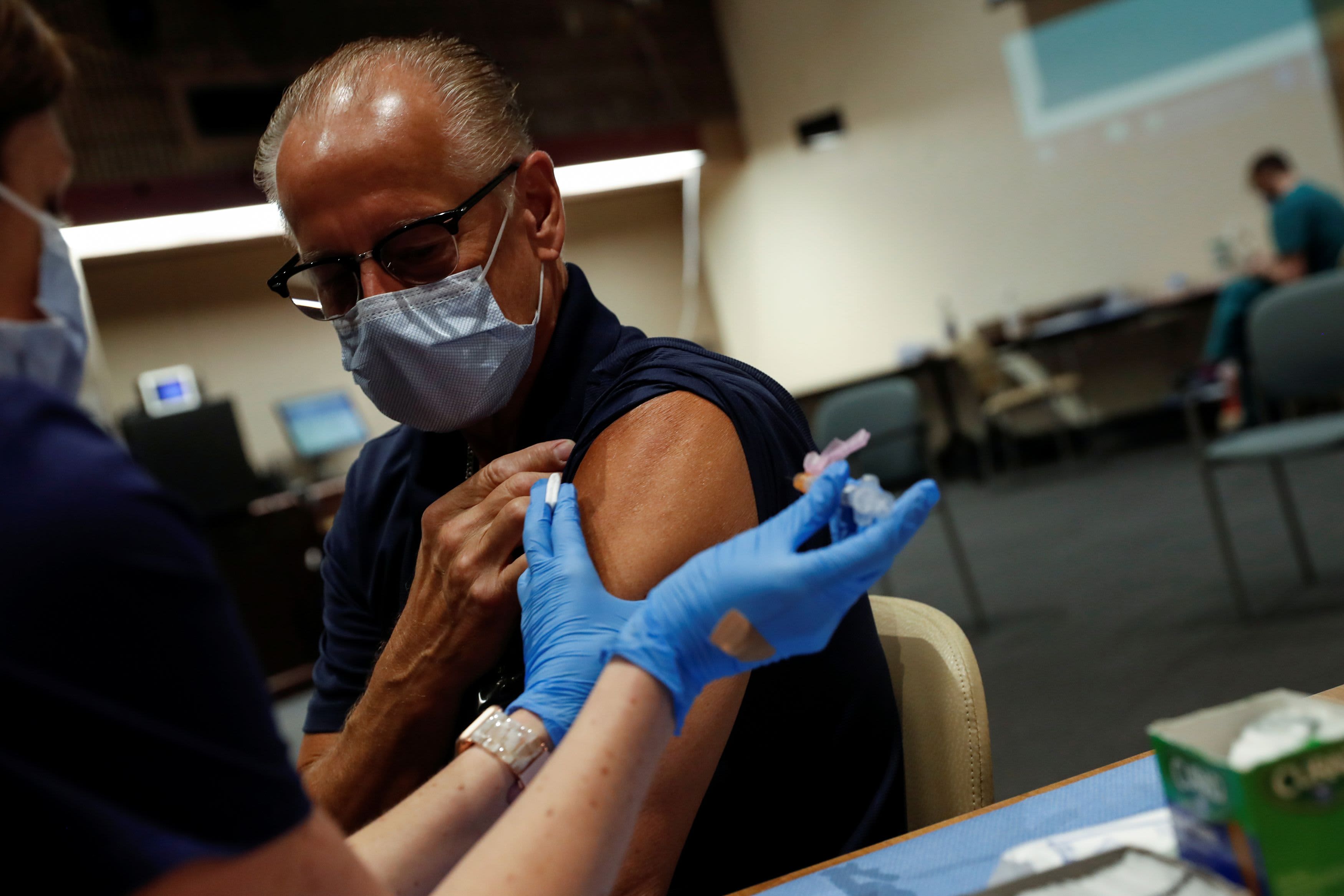
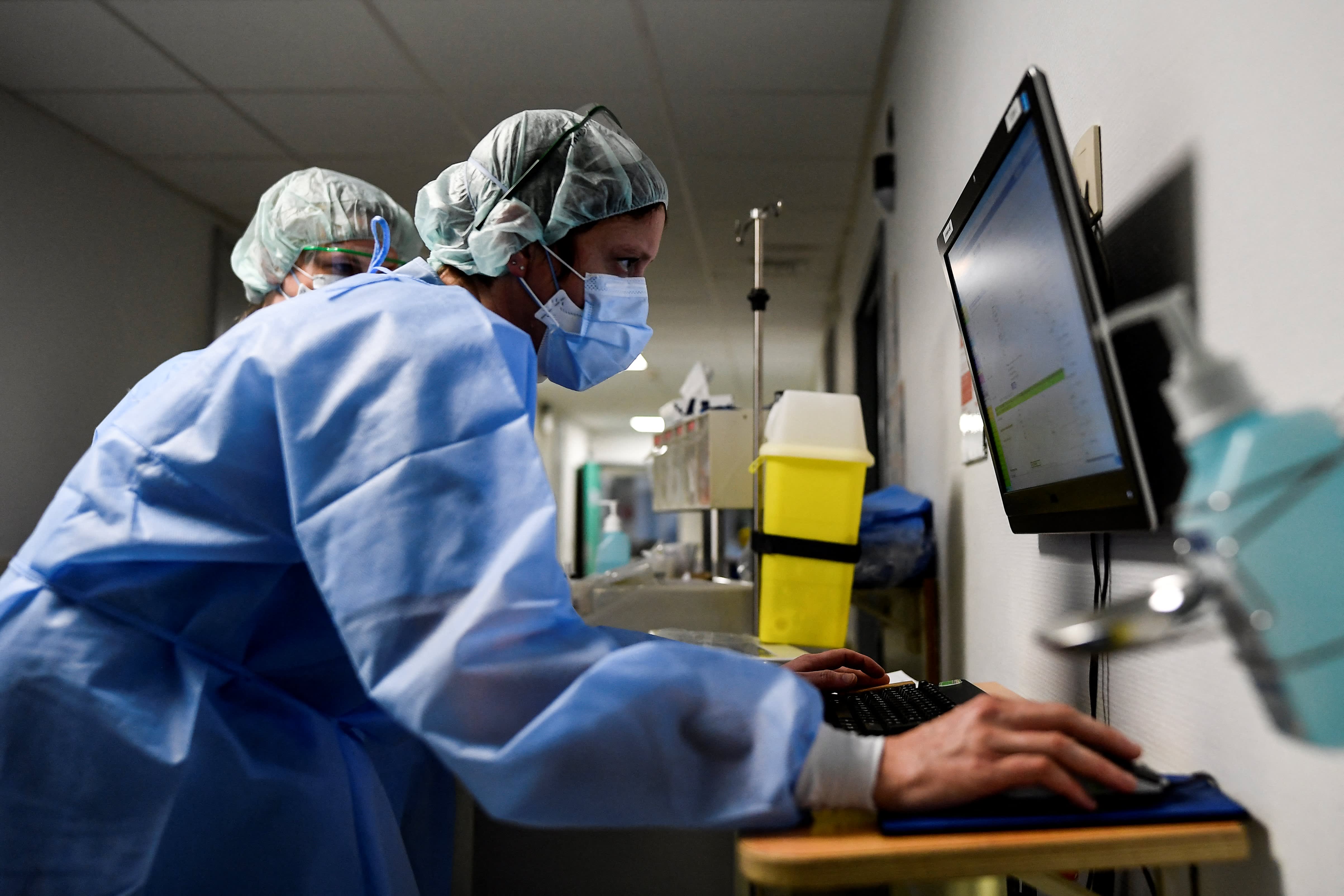
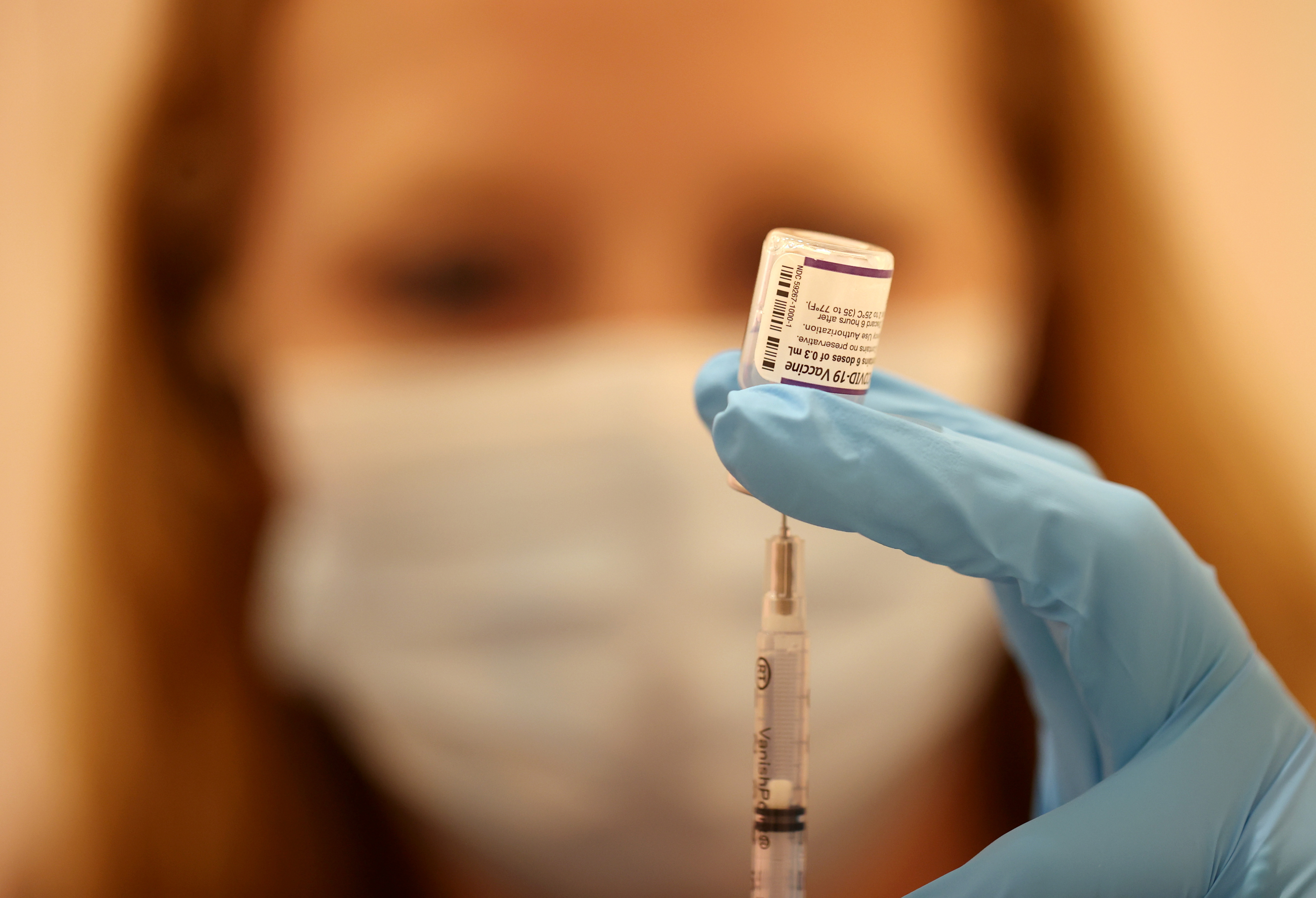
As global concern over omicron continues, vaccine makers Moderna and Pfizer say they are studying vaccine effectiveness against the COVID variant.
But health experts have said it will take time to understand how the new ‘variant of concern,’ first discovered in South Africa, may affect diagnostics, therapeutics and vaccines.
The vaccine maker “mobilized hundreds” of workers last week on Thanksgiving to start studying the new variant, the company said in a statement. But it’s not yet clear whether new formulations will be needed, or if current COVID vaccinations will provide protection against the new variant.
“If we have to make a brand new vaccine I think that’s going to be early 2022 before that’s really going to be available in large quantities,” the Moderna chief added.
Current vaccines could provide some protection, depending on how long ago a person was injected, Burton said. Still, he said unvaccinated people should get vaccinated or receive their booster shots, if eligible.
What are doctors saying about the omicron variant and vaccines?
Local and national health experts and doctors have weighed in on vaccines and the omicron variant, but there’s still much to be learned.
The leading infectious disease expert for the U.S., Dr. Anthony Fauci, said public health experts are trying to find answers to questions surrounding the variant — like whether omicron causes more severe illness, and whether it can evade protection from vaccines or treatments.
“[The omicron variant] has a bunch of mutations that would suggest it could evade the protection, for example, of monoclonal antibodies and perhaps even convalescent plasma for people who have been infected and recovered, and possibly vaccine. These are all maybes, but the suggestion is enough,” Fauci said.
Similarly, Dr. Rachel Rubin, the Co-Lead and Senior Medical Officer for the Cook County Department of Public Health, said “we won’t know for a couple weeks” if the omicron variant has a greater ability to infect.
“We know vaccines greatly reduce the risk of infection and transmission, and until we know more about how Omicron interacts with current vaccines, we won’t be able to answer this specific question with much confidence.”
According to Dr. Emily Landon, infectious disease specialist and chief hospital epidemiologist at University of Chicago Medicine, the mutations seen in the variant might be concerning, but it’s too soon to tell.
“We just don’t know yet,” Landon said. “All we know is really the basic science,” said Dr. Emily Landon, infectious disease specialist and chief hospital epidemiologist at University of Chicago Medicine.
“That means that we know the sequence of the virus and that means we can tell what the spike protein looks like compared to what the usual spike protein looks like. The mutations that are present in the spike protein are concerning. Some of them are the same ones that have made delta variant very, very transmissible. There are also additional changes in the spike protein that we’re seeing in the beta variant and the lambda variant. Those are the two that we were concerned might be able to bypass immunity from the vaccine.”
When might we know how the omicron variant interacts with vaccines?
Rubin said we will probably know “within a couple of weeks” if the current COVID-19 vaccines we have — Moderna, Pfizer and Johnson & Johnson — are effective against the omicron variant.
“This time frame will be able to tell us how many breakthrough cases there are at the same time as laboratory investigation is underway,” Rubin said.
Either way, Chicago health officials are stressing the importance of mask wearing and getting vaccinated, and the COVID booster as the best form of protection from COVID-19 and any of its variants.
“At this point, there are many questions which scientists across the world, and at the Chicago Department of Public Health, are actively working to address all while closely monitoring this strain,” a statement from the department read.
“While that work continues, we must as a city, and importantly as individuals, continue to follow the public health guidance: get vaccinated, and if vaccinated, get your booster; wear a mask indoors and when you’re around other people; and if you are feeling sick, stay home to save lives. The unvaccinated remain the most at risk to themselves and others so please get vaccinated as soon as possible.”
Does it matter which COVID booster vaccine you get?
The CDC hasn’t explicitly recommend anyone get a different brand than they started with but left open the option — saying only that a booster of some sort was recommended.
Federal regulators have recommended getting the same shot as your first dose for booster doses, particularly for those who got an mRNA vaccine. Moderna’s booster dose will be half of its original dosing, while Pfizer’s booster shot is the same as the initial doses.
Some advisers, however, said they would prefer that J&J recipients receive a competitor’s booster, citing preliminary data from an ongoing government study that suggested a bigger boost in virus-fighting antibodies from that combination.
“If you got Johnson and Johnson, I have been advising folks if they got J&J, depending on the reason they chose J&J the first time, if they’re going to get that booster I’ve been recommending getting likely one of the mRNA series – the Moderna or the Pfizer,” Chicago Department of Public Health Commissioner Dr. Allison Arwady said. “That’s where we saw the biggest increase in antibodies in the studies.”
What are the most common side effects of COVID booster shots?
According to the Centers for Disease Control and Prevention, symptoms of the booster appear to largely mirror how people felt after their second dose.
The side effects were mostly considered mild or moderate, and arm pain, fatigue and headache were the most commonly reported symptoms after the third shot.
The most common side effects reported after getting a third shot of an mRNA vaccine, the type made by Moderna and Pfizer, were pain at the injection site, fatigue, muscle pain, headache and fever, followed by chills and nausea, according to CDC data.
The data available for J&J was more limited, but people reported fever, fatigue and headache after receiving a second dose of that vaccine, according to the agency.


/cdn.vox-cdn.com/uploads/chorus_asset/file/23053041/merlin_102575837.jpg) Martha Irvine / AP
Martha Irvine / AP
/cdn.vox-cdn.com/uploads/chorus_asset/file/23053269/merlin_102575815.jpg) Martha Irvine / AP
Martha Irvine / AP
/cdn.vox-cdn.com/uploads/chorus_asset/file/23053326/merlin_102575813.jpg) Martha Irvine / AP
Martha Irvine / AP





/cdn.vox-cdn.com/uploads/chorus_asset/file/23050642/DIKMAJ4318.jpeg) Anwar Hussein
Anwar Hussein
/cdn.vox-cdn.com/uploads/chorus_asset/file/23050640/Diana_Unguarded_Accredited_Access.jpeg) Anwar Hussein
Anwar Hussein
/cdn.vox-cdn.com/uploads/chorus_asset/file/23050638/Anwar_Sam_Zak_Accredited_Access.jpeg) Courtesy of Anwar Hussein
Courtesy of Anwar Hussein


/cdn.vox-cdn.com/uploads/chorus_asset/file/23049506/AdobeStock_267686860.jpeg) stock.adobe.com
stock.adobe.com