
What to Know
- Experts report a rise in ticks and tick encounters this summer, with more tick-related emergency room visits in the past few months than there were at the same time last year.
- Already-increasing Lyme disease rates nearly doubled post-pandemic, and experts suggest climate change may play a role, as ticks thrive in warm and humid conditions.
- As tick encounters may be more common this year, taking appropriate precautions when enjoying the outdoors is important.
- Ticks that carry Lyme disease are also expanding into new areas as weather patterns change across the U.S.
- Prevention is key when it comes to tick bites, experts say. Scroll down for some best ways to keep you and your family tick-free.
Planning an outdoor getaway this summer requires many considerations: navigating rainy weekends, enduring heavy traffic and perhaps worst of all, facing an increasing tick problem.
Experts warn there is an unusually high number of ticks in the wilderness this summer, but there are plenty of tips to keep you and your family safe from tick bites and tick-borne illnesses.
CDC data shows there have been far more tick-related emergency room visits in the past few months than there were at the same time last year. In the Midwest, June visits increased 35% from last year.
Although this year’s numbers are far higher than last year, data shows that tick-related emergency room visits can vary greatly from year to year.
“Some years are hot tick years and some aren’t. Now, this happens to be a hot tick year,” explained Thomas Daniels of the Fordham University Louis Calder Center, who manages Fordham University’s Tick Index.
Daniels’ tick index is a nine out of 10 this week, which indicates high risk of tick exposure in the tri-state area. The tick index is a relative measure, meaning it represents tick-exposure risk compared to past weeks this year.
“We’re always going to start off at one or two, we’re always going to hit a 10 at some point and then we’re always going to back off,” Daniels said. “The difference this year is the fact that our 10 this year involves a lot more ticks than a 10 did last year.”
Although Daniels’ tick index is specific to the Northeast, he said this trend seems to be consistent across the U.S. this summer.
More ticks in the Midwest could mean higher risk of Lyme disease, a tick-borne illness that has become more common in recent years.
I don’t want to dissuade anyone from going out and enjoying nature… Just realize that the risk is high right now.
Thomas Daniels, director of the Louis Calder Center at Fordham University
How to prevent Lyme disease
CDC data shows that already-increasing Lyme disease rates nearly doubled post-pandemic. Experts suggest climate change may play a role, as ticks thrive in warm and humid conditions that are becoming more common. Ticks that carry Lyme disease are also expanding into new areas as weather patterns change across the U.S.
Although Lyme disease is often associated with the Northeast, northern Midwest states like Wisconsin and Minnesota also have high rates of the disease. In Wisconsin, Marquette County, Washburn County and Menominee County each averaged over 200 cases per 100,000 people from 2012 to 2023. The same is true for Cass County in Minnesota.
Lyme disease case rates high in Minnesota and Wisconsin
Annual average Lyme disease cases per 100k people, 2012-2023
Source: CDC, ACS
Population data from ACS 5-year-estimates.
As tick encounters may be more common this year, taking appropriate precautions when enjoying the outdoors is important.
“I don’t want to dissuade anyone from going out and enjoying nature,” Daniels said. “The fact is, we live in forested areas because we like to be out and about. Just realize that the risk is high right now.”
Many Lyme disease patients are unaware of a tick bite before exhibiting symptoms, according to the CDC. That makes it even more important to take preventative measures against tick exposure.
Experts suggest:
- If you are outdoors, stay in the center of trails and avoid wooded and brushy areas.
- Wear long pants and tuck your pants into your socks and your shirt into your pants, to limit ticks’ access to skin.
- To repel ticks, you can use EPA-registered insect repellents and treat your clothes, but not skin, with products containing 0.5% permethrin, or purchase pre-treated clothing.
- When spending time outdoors in high-risk areas for Lyme disease, thoroughly check your body and clothes for ticks. Find CDC guidelines for tick checks here.
What to do if you are bitten by a tick
According to the CDC, a tick usually needs to be attached for more than 24 hours in order to transmit Lyme disease. This means it is important to remove a tick as soon as possible once it has been spotted.
To remove a tick, grab the tick with tweezers as close to the skin as possible and pull upward without jerking or twisting. If tweezers are not available, grab the tick with your fingers. Once the tick has been removed, clean the area and wash your hands with rubbing alcohol or soap.
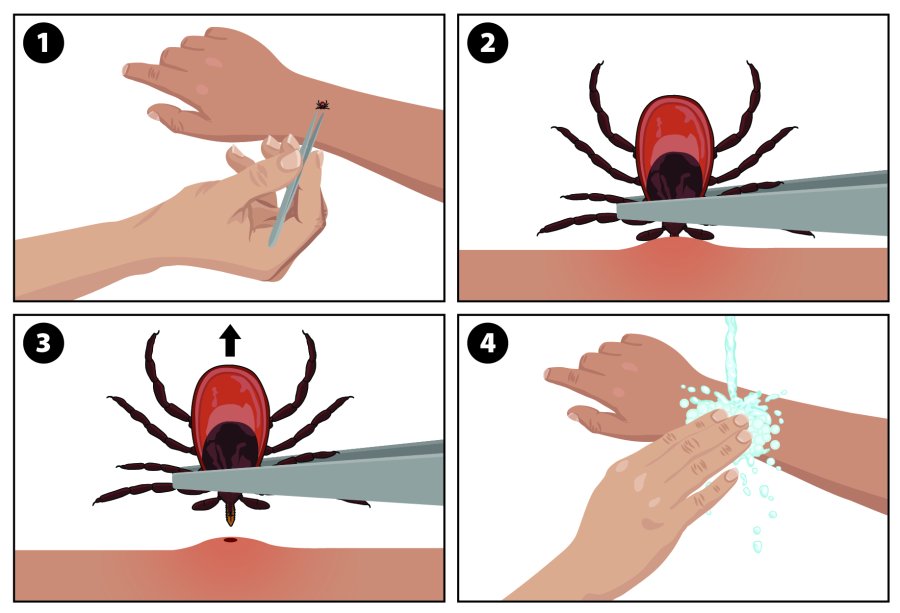
It is important to properly dispose of the tick once it has been removed. The CDC advises any of the following methods for tick removal:
- Placing the tick in a sealed container
- Wrapping it securely in tape
- Flushing it down the toilet
- Putting the tick in rubbing alcohol
You can report your tick experience to resources like The Tick App or the University of Rhode Island’s TickSpotter, to identify the tick species and learn more about tick safety.
Once you have removed the tick, do a thorough check of your clothes and body for other ticks.
Lyme disease symptoms
Lyme disease can present symptoms days or months after you are bitten by an infected tick, according to the CDC. Early symptoms typically show up in three to 30 days and include a rash, often in the shape of a bull’s-eye, fever, chills, fatigue, headaches, muscle aches, joint pain and swollen lymph nodes.
If Lyme disease goes untreated, symptoms can present days to months after a tick bite. Later signs of Lyme disease include severe headaches, multiple rashes across the body, droop on one or both sides of the face, muscle, joint, tendon and bone pain and other serious symptoms. See a full list of possible Lyme disease symptoms on the CDC website.
The CDC advises seeking medical attention if you experience any of the symptoms mentioned above and have recently been bitten by a tick, or live in or have recently traveled to an area where Lyme disease is common.
How Lyme disease spreads
There are two species of ticks in the U.S. that can carry Lyme disease, the black-legged tick, commonly known as the deer tick, and the western black-legged tick. If you are bitten by a tick, experts recommend identifying the species of tick to know whether you are at risk of contracting a tick-borne illness.
There are many other tick species across the U.S. that do not carry Lyme disease, but can carry other tick-borne illnesses. The black-legged tick, lone star tick and dog tick commonly bite humans, but they are not the only species that do.
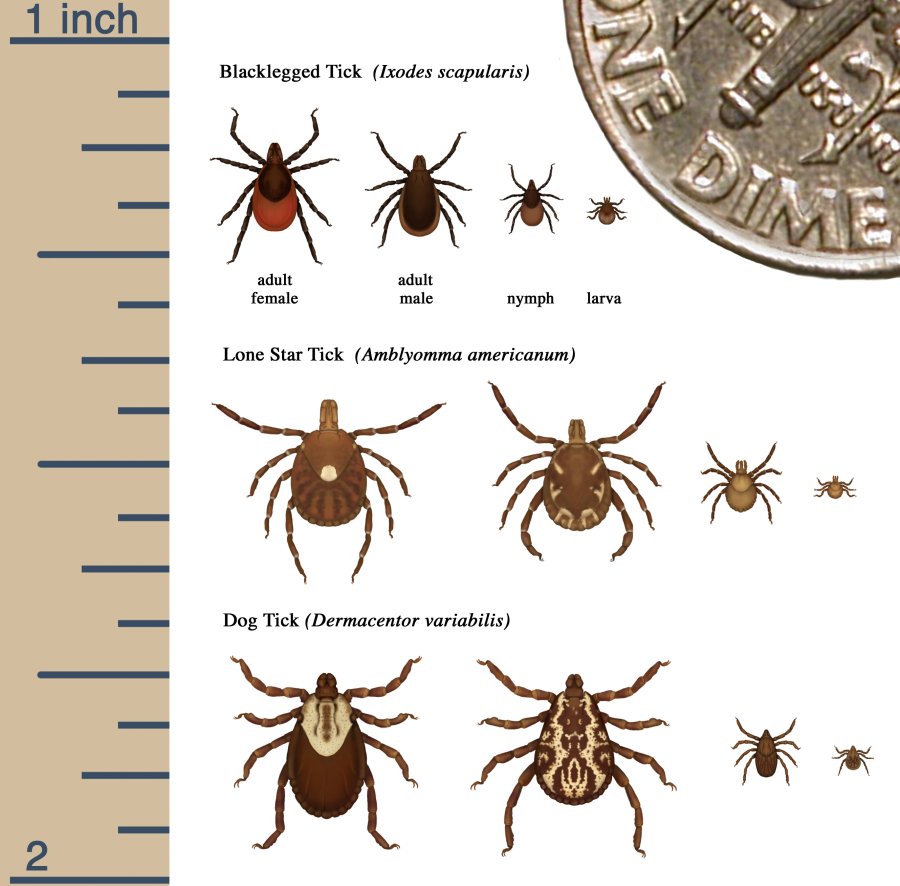
Adult deer ticks are most prevalent in the spring and fall, while nymphal deer ticks are more common in the summer months. Nymphal ticks especially pose a risk when it comes to Lyme disease, because they are about the size of a poppy seed and difficult to spot.
Ticks that can carry Lyme disease are present on the West Coast and across the eastern U.S., but Lyme disease rates are highest in the Northeast, Mid-Atlantic and northern Midwest. Experts estimate that roughly 20% to 30% of young deer ticks in the Northeast carry Lyme disease.
This story uses functionality that may not work in our app. Click here to open the story in your web browser.
from NBC Chicago https://ift.tt/LE9N2HV

No comments:
Post a Comment